Unknowns
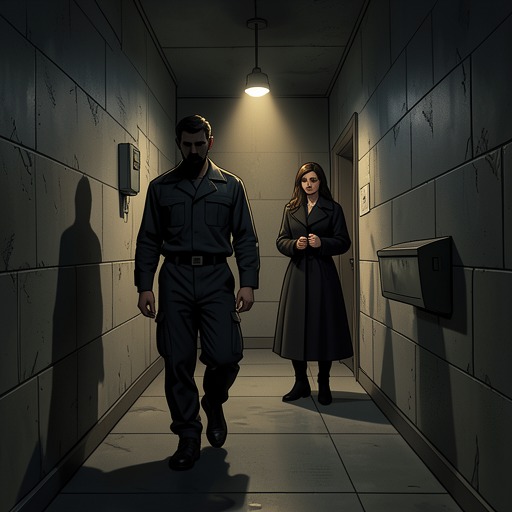
Say NothingThe Unknowns were a secret, handpicked unit of the Irish Republican Army whose work ranged from intelligence operations to transporting people for execution. They sat outside the movement’s ordinary organizational chart but, according to Brendan Hughes, answered directly to Gerry Adams. Pat McClure led the squad on the ground, while members including Dolours Price and Marian Price carried out assignments whose consequences reached from West Belfast to London and the Republic of Ireland. The unit’s secrecy made it an instrument of the organization’s power; it also obscured where operational responsibility ended and command responsibility began.
Formation and Command
The Unknowns had been established as a tiny, elite cell that ostensibly did not exist. Rather than fitting into the Irish Republican Army’s regimented structure, the group answered directly to Gerry Adams. Hughes later described its members as “head hunters”: a selected team entrusted with dangerous, secretive, and sometimes unsavoury work. In a later recollection, he put the relationship more plainly: “They were always Gerry’s squad.” That recollection matters because the unit’s unconventional place in the hierarchy was not merely a matter of concealment; it connected its clandestine operations to the senior leadership.
The unit’s day-to-day commander was Pat McClure, known to Hughes as “Wee Pat.” In his thirties, McClure was older than many of the volunteers around him and had served in the British Army before the Troubles. He kept a low profile and was regarded by those who knew him as capable and dedicated. He had a family and an air of responsibility, did not socialize with his soldiers, but looked out for the people on his team. His authority combined discretion with practical concern for the volunteers under his command.
That concern was evident during a winter gun battle in Ballymurphy. When young members took up their weapons and said they were going to join the fight, McClure stopped them. They had not been trained to shoot at night, he warned, while British soldiers had. He told them they might end up shooting at “newspapers blowing in the street,” and that if the soldiers “take the gloves off,” the volunteers would be wiped out. The exchange presents the Unknowns not only as an operational cell but as a unit whose commander judged when participation would be recklessness rather than useful action.
Members and Operational Preparation
Dolours Price joined the Unknowns with her friend Hugh Feeney, and Marian Price joined as well. When the group assembled for the London operation, about ten people remained. Feeney, an erudite young man in his early twenties, became quartermaster and carried the operation’s money in a thick roll of five-pound notes. Gerry Kelly, whom Dolours was meeting for the first time, had escaped from prison while serving a sentence for bank robbery. She thought well of him. Marian’s place in the group was constant in Dolours’s account: “There was always Marian.”
McClure chose Dolours to lead the London operation, appointing Feeney and Marian as her lieutenants. Dolours called herself “the OC of the whole shebang.” None of the recruits had experience operating behind enemy lines, so McClure arranged intensive explosives and timer training across the border. The arrangement put Dolours in charge of the mission while keeping the group connected to McClure’s command and to Adams’s authority above him.
The operation’s targets were selected by the Unknowns and then submitted to the leadership in Belfast for approval. About a month before the mission, Dolours travelled to London with Martin Brady, a muscular team member who had worked in a West End restaurant and knew the city. The targets were intended to “evoke particular political questions,” as Gerry Kelly later explained. The timing was also deliberate: the operation was planned for the day of a referendum in Northern Ireland on whether the territory should remain in the United Kingdom. Kelly described the purpose as bringing “the reality of colonialism” home to England.
Court-Martials, Intelligence, and Executions
The Unknowns also carried out assignments connected to the Irish Republican Army’s internal justice and intelligence systems. Joe Lynskey faced a court-martial for trying to murder a fellow volunteer and then concealing the crime in a way that led to another innocent man’s death. The court-martial was presented as a choreographed form of internal accountability, less arbitrary than a bullet in the back of the head; nevertheless, such proceedings were not known for acquittals, and Lynskey’s prospects looked bleak. The responsibility for taking him across the border to face the court-martial and likely execution fell to the Unknowns, particularly Dolours Price.
The unit was also sent to transport Seamus Wright and Kevin McKee. The two men had provided information about the Mobile Reconnaissance Force and the Four Square Laundry, then worked as triple agents gathering intelligence on the British. Brendan Hughes may have promised them immunity, but the account emphasizes that he was not authorized to guarantee it. Their earlier betrayal remained unforgivable to the organization, and once the simultaneous raids were complete they had no further leverage. The Unknowns were summoned, and Dolours drove both men across the border to the Republic of Ireland. Their case shows how a temporary intelligence role did not erase the danger attached to their original breach of the organization’s rules.
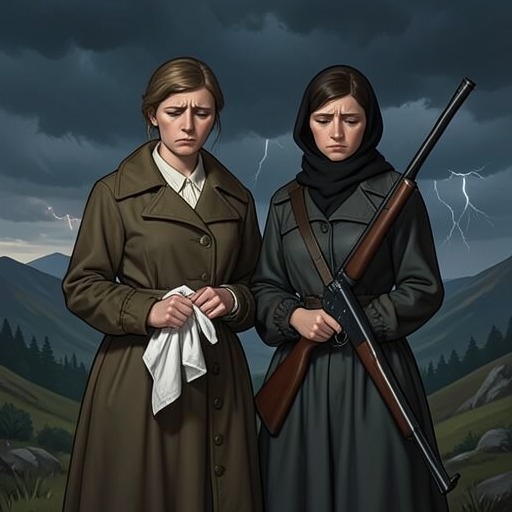
The Unknowns’ role in enforced disappearances was more consequential still. In a later account of Jean McConville’s abduction and death, Dolours said that she, McClure, and another volunteer collected McConville from a house in West Belfast and drove her towards the border. Dolours told McConville that she would be handed over to the Legion of Mary, a Catholic charity, and taken somewhere safe. That reassurance concealed the purpose of the journey. Dolours also said McConville had confessed to being an informer, citing a transmitter found in her flat and an incident in which volunteers allegedly saw her at a barracks on Hastings Street, hidden behind a blanket with a slit through which she could see.
Dolours described three members of the Unknowns being present at the grave: McClure, another volunteer, and herself. They had only one gun and decided that each would fire, so that none could be certain of having delivered the fatal shot. Dolours said that she deliberately missed; one of the others fired the shot that killed McConville. A separate account also placed McClure and Dolours at the grave and said that the third person fired the fatal shot, but did not identify that person. The suggestion that the third member was Marian Price remained a speculation, not an established identification. The uncertainty is part of the record of the operation: the group’s secrecy protected identities even as later accounts tried to reconstruct who had done what.
London Plans and Strategic Purpose
Dolours’s case for taking the war to England began with her dissatisfaction at the effects of bombing in Northern Ireland. She believed that the destruction fell largely on local people while the English public, across the Irish Sea, remained only dimly aware of the catastrophe. She argued to McClure that “This is half their war” and that some of it should be fought on their territory. For her, an attack in England offered a “short, sharp shock” intended to make the conflict harder for the British public to ignore.
After Seán Mac Stíofáin approved the proposal, Dolours worked with McClure and Gerry Adams on an initial plan to firebomb London. The devices were smuggled into the city for a team of women to place in department stores on Oxford Street. Before they could be used, the acid in the devices leaked and ruined them. Dolours, already in London, abandoned the mission and walked to the banks of the Thames, where she slid the faulty bombs into the river. The failure did not end the broader campaign: the later operation involved a prepared team, reconnaissance, selected targets, training, and approval from the Belfast leadership.
Adams’s involvement in the London plan was disputed. Adams denied involvement, while Dolours Price and Brendan Hughes maintained that he had participated. Hugh Feeney, himself a member of the Unknowns and a participant in the mission, said Adams was closely engaged with the unit’s activities during this period. The competing accounts leave a distinction between the unit’s direct chain of command, the leadership’s approval of targets, and the disputed degree of Adams’s personal involvement in the specific plan.
Disappearance, Testimony, and Responsibility
The McConville case places the Unknowns within a wider system of authorization. Dolours said that decisions to disappear people were made by the Belfast Brigade and that brigade staff would have had to discuss and settle them. Gerry Adams was the brigade commander. The account also stresses that the movement was hierarchical: executing people and burying them in unmarked graves required authorization, and the secret burial of bodies was a policy rather than an accident. Adams, however, consistently denied knowing about the decision-making behind the tactic. The contrast between that denial and the testimony about the brigade’s process makes the Unknowns’ position especially significant: the squad performed secret operations, but the question of who authorized them could not be resolved simply by identifying the people present at the scene.
Years later, Dolours discussed the disappearances with Ed Moloney while staying at St Patrick’s Hospital for treatment for depression and PTSD. Moloney recorded a conversation in her room and filmed a later interview in a rented flat. She said she and McClure had discussed among themselves whether disappearing people was a wise policy, but that they had been told it was how things were done. She also said that by the time she was ordered to take McConville across the border, she had already been helping to disappear people for some time. Her testimony combined acknowledgment of participation with doubts about the practice and an account of the orders and explanations given to her.
The surviving accounts do not make every role equally clear. Anthony McIntyre said Dolours had spoken to him off tape about the three-person death squad and the unmarked grave, and he confirmed that McClure was present while withholding the third person’s identity. He added that Adams later asked the unidentified shooter to become his personal driver. The book’s discussion considers whether Marian might have been the third Unknown, partly because both sisters belonged to the unit and reported to McClure, but treats that possibility as an inference rather than a confirmed fact. The gap between testimony, inference, and identification reflects the same secrecy that shaped the unit’s operations.
Later History and Significance
Hughes remembered McClure as the Unknowns’ commander, but McClure eventually left active service, at some point taking work as a black-taxi driver. When asked whether he would return to fight the long war, he said no: he was finished. Hughes heard that McClure emigrated to Canada and died there. The account offers no comparable clear ending for the unit itself; its story survives principally through the covert missions attributed to it and the later testimony of people who served in or encountered its operations.
The Unknowns’ significance lies in the tension between a compact operational team and the larger hierarchy it served. McClure’s protective command, Dolours’s authority over the London mission, the leadership’s role in approving targets, and the unit’s assignments involving Lynskey, Wright, McKee, and McConville show different forms of delegated action. Yet concealment also distributed knowledge unevenly: participants could carry out an order without knowing its full authorization, and leaders could deny responsibility for decisions attributed to the organization’s command structure. In the accounts of the Unknowns, secrecy is both a method of operation and a continuing obstacle to settling responsibility.